How many times have you felt frustrated watching your accounts receivable grow without being able to do much about it? It’s a scenario that most medical practitioners in Pakistan know all too well—patients leave without paying their bills, or their payments get delayed, and you’re left chasing them. If you’re struggling with this issue, you’re not alone. In fact, it’s one of the most common problems healthcare providers face across Pakistan.
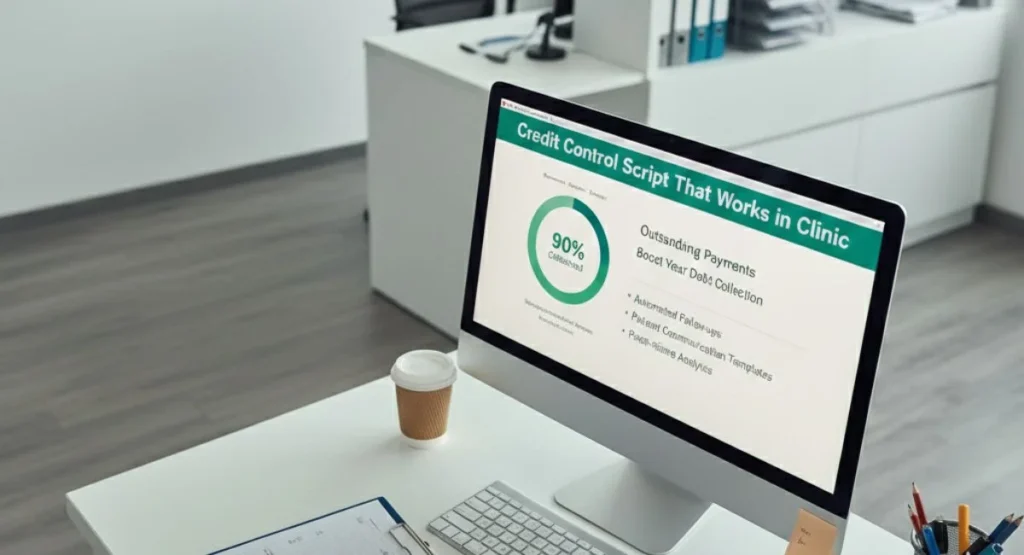
But what if you could solve this problem with a well-crafted credit control script that can help you collect over 90% of your outstanding receivables? This blog post will walk you through the process of crafting and implementing an effective credit control strategy that works for medical businesses. From understanding how medical credit control operates to actionable steps for boosting your collections, you’ll leave with practical insights that can be applied immediately.
What is Medical Credit Control, and Why is it Important?
Medical credit control is the process of managing and collecting payments for medical services provided on credit. For healthcare providers in Pakistan, ensuring timely payment for services rendered is critical for maintaining cash flow, ensuring operational efficiency, and avoiding financial strain.
In Pakistan’s healthcare sector, medical credit control can sometimes seem like an uphill battle. With patients often not paying their bills upfront or delaying payments for extended periods, the financial impact can be significant. Without proper management of outstanding receivables, a practice can easily fall into a cash-flow crunch, ultimately affecting service quality and operations.
Key Point: Effective credit control not only ensures your practice stays financially healthy, but it also helps build better patient relationships by providing clear and professional communication regarding payments.
How Can You Achieve 90%+ Collections Using a Credit Control Script?
In order to significantly improve your collections, having a solid accounts receivable strategy is essential. The idea behind using a credit control script is simple: create a step-by-step process that provides structure and consistency to the collections process. By doing this, you not only ensure timely collections but also maintain a professional relationship with your patients.
Here’s how you can implement a credit control script:
1. Pre-emptive Communication: Set Clear Expectations
Before any treatment or service is provided, make sure that your patients are fully aware of the payment expectations. This can be done by having a clear and concise payment policy that patients are required to sign. Additionally, ensure that this policy is explained verbally during the initial consultation. This removes any ambiguity about payment terms upfront and helps avoid future disputes.
Pro Tip: Use friendly but assertive language like: “We understand medical expenses can be challenging, so we offer flexible payment terms. We just want to make sure you’re aware of your financial responsibility.”

2. Create a Structured Follow-Up Process
Once the treatment is done, don’t let the bill linger. You should have a series of automated reminders or personalized calls that politely remind patients about their outstanding dues. Your script should include specific language for each phase of the follow-up, such as:
First reminder:
A gentle nudge, focusing on professionalism.
Example: “Good afternoon, [Patient’s Name]. We hope you’re doing well after your treatment. We just wanted to remind you that your payment of [Amount] is due. If you have any questions or would like to discuss payment options, please don’t hesitate to contact us.”
Second reminder:
After a week or two, it’s time for a more urgent tone while maintaining respect.
Example: “Dear [Patient’s Name], we noticed that the payment for your recent treatment is still pending. Kindly arrange for payment by [due date] to avoid any service disruptions. We’re here to assist with any concerns regarding your payment.”
Third reminder:
If the patient has still not paid, this is when you need to get more serious.
Example:“Hello, [Patient’s Name]. We’ve attempted to reach out several times regarding your outstanding payment of [Amount]. Please be aware that failure to settle the bill may result in [insert consequences, e.g., restriction of future services]. We urge you to clear this balance immediately.”
Expert Insight:
Automating reminders via SMS or email can save your staff a lot of time and ensure consistency.
3. Be Ready to Offer Payment Plans
Some patients may genuinely struggle to pay the full amount upfront. Having a script that offers payment plans or alternative financing can be a great way to secure partial payments without losing the customer entirely.
Pro Tip: Be empathetic yet firm. For example: “We understand that medical bills can be overwhelming, and we’re here to help. Would you be open to discussing a payment plan that works for both of us?”
How Do You Effectively Deal with Uncooperative Patients?
Despite your best efforts, some patients may simply refuse to pay or continually delay payments. In these cases, it’s crucial to have a script for dealing with uncooperative patients.
The key is to remain calm, professional, and firm. Avoid getting emotional or argumentative, as this could damage your relationship with the patient and harm your practice’s reputation.
Sample Script for Uncooperative Patients:
- Initial Script: “We’ve noticed that your payment is significantly overdue. We’d like to remind you that the outstanding balance of [Amount] needs to be cleared as soon as possible. If there’s an issue with payment, please let us know so we can work with you on a solution.”
- Escalation: “At this point, the account has remained unpaid for [X weeks/months], and we’ve made several attempts to reach you. As per our agreement, failure to settle the amount may result in [insert action: restrictions, legal action, etc.]. We hope to resolve this amicably and request payment immediately.”
How Can You Improve Your Medical Credit Control Over Time?
1. Monitor and Analyze Your Accounts Receivable
A significant part of improving credit control is knowing where you stand. Regularly monitoring your accounts receivable allows you to spot trends, identify patients who repeatedly delay payments, and take proactive steps to avoid these issues in the future.
Pro Tip: Use financial management software to track outstanding accounts and automate reports. This saves time and helps you stay on top of due payments.
2. Train Your Staff
Your credit control efforts will only be as strong as your team’s ability to execute them. Regular training in communication and negotiation techniques is crucial for maintaining consistency and professionalism.
What Role Does Technology Play in Medical Credit Control?
In today’s world, there’s no excuse for outdated payment processes. Leveraging technology can drastically improve the efficiency of your medical credit control efforts.
Key Tools for Success:
- Automated Billing Software: Automating the billing and reminder processes is a game changer. Platforms like Quick Books, Xero, or specialized medical billing systems help streamline the entire process, making sure bills go out on time and reminders are automatically sent.
- Patient Portals: Offering a self-service portal allows patients to check their balances, make payments online, and track their payment history—this can reduce your administrative burden.
Conclusion
To sum it up, implementing an effective medical credit control script can drastically reduce your outstanding accounts receivable, improving your practice’s cash flow and ensuring that your patients understand their payment responsibilities. By combining clear communication, structured follow-ups, and the use of technology, you can collect 90% or more of your outstanding dues with ease.
Start small by incorporating these strategies into your practice, and over time, you’ll see a noticeable difference in your accounts receivable. Don’t wait until your debts pile up—take control of your collections today.
Ready to Upgrade Your Clinic?
Make your clinic smart, fast, and paperless with SehatPro Clinic Management Software.
Call or WhatsApp for Free Demo & ConsultationFAQ Section
1. What is the best way to remind patients about unpaid bills?
Automated SMS and email reminders are effective, followed by phone calls for more urgent cases. Be polite but firm.
2. How do I deal with patients who keep delaying payments?
Offer them flexible payment plans or discuss the possibility of restricting future services if payment is not made promptly.
3. Can technology help in medical credit control?
Yes, automated billing software and patient portals can help track accounts receivable and send automated reminders.
4. What should I include in a payment policy?
Clear terms on payment deadlines, consequences for late payments, and available payment options should be included.
5. How can I make payment discussions less uncomfortable?
Use empathetic language while staying firm on the need for timely payments. Offering payment plans can ease the conversation.
6. Should I hire a collection agency for overdue bills?
Only consider this as a last resort. It’s better to maintain direct communication with patients and offer them payment options before escalating.