How Digital Prescriptions Reduce Medical Errors in Pakistani Clinics
Digital prescription software reduces medical errors in Pakistani clinics by removing illegible handwriting, auto-checking drug names and dosages, and pulling patient history before every prescription is written. Clinics using an e-prescription system like SehatPro cut transcription mistakes at pharmacies and give doctors a complete, accurate record at every visit.
INTRODUCTION
A pharmacist in Multan once told us he keeps a private list of doctors whose handwriting he simply cannot read — and calls the clinic before filling anything he’s unsure of. The World Health Organization estimates that medication errors cost health systems worldwide close to USD 42 billion a year, and unclear or incomplete prescriptions are one of the most common causes. In Pakistan, where walk-in volume is high and consultation time is short, a rushed handwritten script is where most of these errors begin.
This is exactly the gap digital prescription software Pakistan clinics are adopting was built to close. When a prescription is typed instead of scrawled, drug names are unambiguous, dosages are structured, and duplicate or conflicting medicines are flagged before the patient ever reaches the pharmacy counter.
In this article, you’ll learn where prescription errors actually happen in Pakistani clinics, how an e-prescription system prevents them, what a real digital workflow looks like from token to printed slip, and how to evaluate whether your clinic is ready to make the switch.
Let’s start with where the errors come from in the first place.
Where Do Most Medical Errors in Pakistan Actually Happen?
Most medical errors in Pakistan happen at three points in the clinic workflow: illegible handwriting misread at the pharmacy, missing patient history during a rushed consultation, and verbal instructions patients forget by the time they get home. Each of these is a process failure, not a doctor’s mistake.
Consider a general physician in Faisalabad seeing 60 to 80 patients a day during flu season. There’s no time to re-read a chart from six months ago, so the same allergy question gets asked — or skipped — every visit. A study published in the Journal of Pakistan Medical Association on prescribing patterns in outpatient settings has repeatedly flagged incomplete dosage instructions and drug name confusion as recurring issues in high-volume OPD settings. None of this is about competence. It’s about volume, time pressure, and paper that can’t talk back.
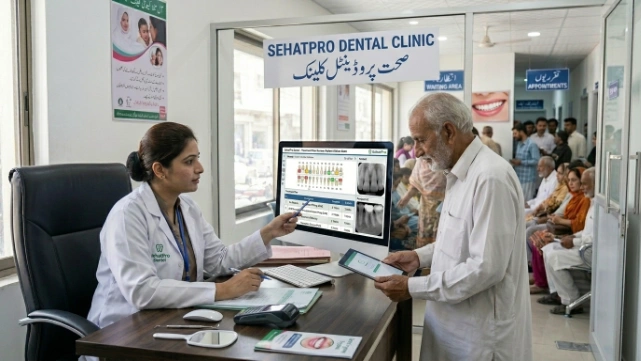
Handwriting is the most visible problem, but it isn’t the only one. A prescription written from memory, without the patient’s last visit in front of you, is a guess dressed up as a diagnosis. This is where SehatPro’s EMR software for Pakistan clinics changes the starting point of every consultation — the patient’s full history, past prescriptions, and known allergies load automatically the moment their token is called, so the doctor is prescribing from data, not memory.
The fix isn’t asking doctors to slow down. It’s giving them a system that keeps up.
How Does an E-Prescription System Actually Prevent Medical Errors in Pakistan?
An e-prescription system prevents errors by structuring every prescription into selectable fields — drug name, dosage, frequency, duration — instead of free-form handwriting. It also cross-checks against the patient’s existing medication list and flags anything that looks off before you hit print.
Structured Fields Instead of Free Text
When a cardiologist in Karachi prescribes a beta-blocker, SehatPro’s fast consultation and prescription writing tools present the drug from a searchable list, not a blank line. Dosage and frequency are chosen, not typed from scratch, which removes the two most common failure points: wrong drug spelling and unclear dosage shorthand.
Diagnosis Bundles for Repetitive Cases
A pediatrician in Islamabad who sees the same five viral infections every winter doesn’t need to rebuild a prescription from zero each time. One-click diagnosis bundles let the doctor select a common condition and load a pre-approved, editable prescription template — cutting both time and the chance of leaving something out.
History-Aware Prescribing: Preventing Medical Errors in Pakistan
This is the part paper can never do. Before a gastroenterologist in Lahore prescribes anything, SehatPro’s unlimited patient records feature surfaces the patient’s full history — past visits, existing conditions, prior prescriptions — on the same screen. No flipping through a file cabinet. No relying on the patient’s memory of what they were given last time.
Expert Insight — From SehatPro’s Experience Across 135+ Doctors: The clinics that cut errors fastest aren’t the ones with the most tech-savvy staff — they’re the ones that stop treating the EMR as optional for “quick” patients. We’ve seen doctors skip logging a walk-in “just this once” because the queue is long, and that’s exactly the visit where a missed allergy note causes a problem six months later. Consistency, not complexity, is what actually protects patients.
Paper Prescriptions vs. Digital Prescriptions: What Actually Changes?
The difference between paper and digital prescriptions isn’t cosmetic — it changes error rates, consultation time, and what happens after the patient leaves your clinic. Here’s how the two compare directly.
| Factor | Paper Prescription | Digital Prescription (SehatPro) |
|---|---|---|
| Legibility | Depends on handwriting; frequent pharmacy misreads | Typed, standardized, always legible |
| Time per prescription | 3–5 minutes, longer for complex cases | Under 1–2 minutes with diagnosis bundles |
| Drug interaction check | Manual, relies on doctor’s memory | Flagged automatically against patient history |
| Patient history access | Paper file, often incomplete or missing | Full history loads instantly on screen |
| Error correction | Requires re-writing entire slip | Edited digitally, reprinted instantly |
| Record after patient leaves | Stored in a file cabinet, easily lost | Stored permanently in the cloud, searchable |
| Multi-branch consistency | Impossible to cross-check between branches | Centralized records across all branches |
For a multi-branch clinic in Faisalabad, that last row matters more than any other. A patient seen at one branch on Monday and another branch on Thursday should not be a stranger to the second doctor. SehatPro’s support for multi-branch clinics keeps every branch reading from the same patient record, which paper simply cannot do.
Why Should General Physicians and Specialists Care About Prescription Software for Doctors?
Prescription software for doctors matters because it protects your time and your liability at the same time. A faster, cleaner prescription reduces the daily grind of repetitive writing while creating a permanent, auditable record that protects you if a dispute ever arises.
A dermatologist in Sialkot managing a busy walk-in practice doesn’t have the luxury of double-checking every handwritten note against last month’s file. When something goes wrong — a patient claims they were never told to avoid a certain medicine, or a pharmacy dispenses the wrong strength — a digital record with a timestamp is the difference between a five-minute clarification and a drawn-out dispute. Public health researchers reviewing outpatient documentation gaps in South Asian clinics have consistently pointed to incomplete records as a major factor in preventable disputes and repeat errors.
There’s also the plain reality of consultation volume. A urologist in Karachi or a general physician in a busy Multan clinic isn’t seeing 15 patients a day — it’s often 60 or more. Every minute saved on writing a prescription is a minute available for actually listening to the patient. SehatPro’s fast consultation and prescription writing workflow is built around this exact pressure: type less, select more, print instantly.
None of this requires a doctor to become a “tech person.” It requires a system that fits into how Pakistani clinics already run — fast, walk-in heavy, and often short-staffed.
What Does a Paperless Clinic in Pakistan Actually Look Like Day to Day?
A paperless clinic in Pakistan runs on four connected steps: patient check-in through a digital token, consultation with history already loaded, a printed or WhatsApped prescription, and automatic reminders for follow-up. No file cabinets, no lost slips, no re-asking the same questions.
Step-by-Step: A Typical Visit
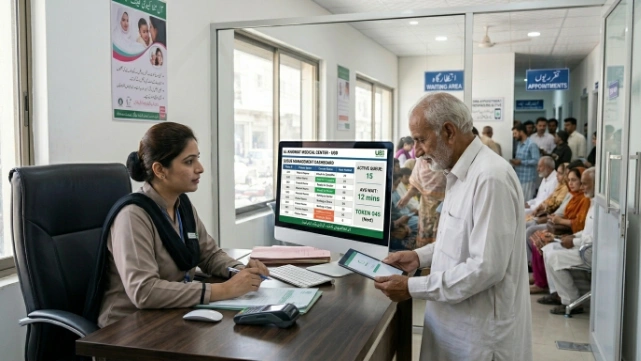
- Check-in — The receptionist registers the patient through SehatPro’s appointment scheduling and queue management system, generating a live token instead of a handwritten waiting list.
- Consultation — The doctor opens the patient’s record; history, allergies, and past prescriptions are already visible.
- Prescription — The doctor selects medicines through structured fields or a diagnosis bundle, then prints a clean, legible slip.
- Follow-up — SehatPro’s automated SMS and WhatsApp reminders confirm the next appointment and, if needed, medicine refill reminders — in Urdu or English, depending on the patient.
For a solo general physician in Toba Tek Singh or a growing clinic in Sahiwal, this isn’t a dramatic overhaul. It’s a replacement of five separate paper-based habits with one connected screen. Staff who are Urdu-speaking and not necessarily comfortable with English-heavy software can work entirely in Urdu, Sindhi, or Arabic, since SehatPro’s interface supports 27+ languages.
What About Areas With Unreliable Internet?
This is the question we hear most from clinics in Larkana and smaller towns across Punjab and Sindh. The ProCare plan includes an offline installation option specifically for areas with poor connectivity, so a power cut or a weak signal doesn’t stop a consultation mid-visit. Records sync once the connection returns.
Is Patient Data Actually Safe on a Digital System?
Patient data on a properly built digital system is significantly safer than a paper file cabinet, because it’s encrypted, backed up automatically, and only accessible to staff with the right role-based permissions — not left in an unlocked drawer where anyone can flip through it.
A gynecologist in Lahore handling sensitive patient histories has good reason to be cautious about data privacy — this is not a topic to take lightly. Paper files can be misplaced, photographed, or read by anyone walking past an open cabinet. SehatPro’s data privacy and security setup uses encryption and secure cloud backups, and role-based access means a receptionist sees scheduling information while only the doctor sees full clinical notes.
Role-based access also solves an internal problem clinics rarely discuss openly: not every staff member should see every patient’s full record. A lab technician connected through QuickLab integration needs test results, not consultation notes. A receptionist needs appointment details, not diagnosis history. Structuring this by role — rather than trusting everyone with everything, as paper effectively does — is a quieter but equally important form of error prevention.
How Much Does Digital Prescription Software Cost for a Pakistani Clinic?
Digital prescription software for Pakistani clinics starts at PKR 2,999 per month for a solo-practice plan and scales up based on clinic size, number of branches, and whether offline access is needed. Most small clinics recover the cost within the first month through fewer missed appointments and faster patient turnover.
Cost is usually the first objection we hear from a clinic owner in Karachi weighing whether to switch, and it’s a fair one — nobody wants a system with hidden fees. SehatPro’s CareStart plan (PKR 2,999/month) covers the essentials for a single doctor: appointment scheduling, prescription writing, and patient records. Larger, multi-branch operations typically move toward ProCare (PKR 79,999 one-time), which adds offline installation, or a custom EnterpriseCare plan for hospital-scale needs.
The real comparison isn’t software cost against zero cost — paper isn’t free. It’s the cost of a missed follow-up, a re-written prescription, a lost file, or a pharmacist calling to confirm a dosage that should have been clear the first time. SehatPro’s patient reports and insights dashboard also gives clinic owners a monthly, exportable view of exactly where time and money are going, which a paper ledger never will.
CONCLUSION
Prescription errors in Pakistani clinics rarely come from a lack of medical knowledge — they come from handwriting nobody can read, patient history nobody can find in time, and a pace of walk-in patients that leaves no room to double-check anything. Digital prescription software Pakistan clinics are adopting fixes this at the source: structured, legible prescriptions, instant access to patient history, and a record that follows the patient across every branch and every visit.
If you run a clinic in Multan, Lahore, Sialkot, or anywhere in between, the takeaway is simple: fewer handwritten slips means fewer pharmacy call-backs, fewer disputes, and more time actually spent with patients. Start with prescription writing and patient records — the rest of the workflow, from queue management to WhatsApp reminders, builds naturally from there.
FAQ
What is digital prescription software and how does it work in a Pakistani clinic? Digital prescription software lets doctors write, store, and print prescriptions electronically instead of by hand. In a Pakistani clinic, it pulls up the patient’s history automatically, structures drug names and dosages into selectable fields, and prints a clean slip — reducing pharmacy misreads and missed details.
Is digital prescription software Pakistan clinics use expensive to set up?
Not for most clinics. SehatPro’s CareStart plan begins at PKR 2,999 per month, covering prescription writing, appointment scheduling, and patient records. Larger or multi-branch clinics can move to a one-time ProCare plan or a custom EnterpriseCare setup based on their size.
Can Urdu-speaking staff use an e-prescription system without training difficulties? Yes. SehatPro’s interface is available in Urdu, English, Sindhi, Arabic, and 27+ other languages, so receptionists and staff can work in the language they’re most comfortable with. Most clinics report staff adjusting within a few days of daily use.
How long does it take to set up a paperless clinic in Pakistan?
Most solo clinics are fully operational within a few days, including patient record migration and staff onboarding. Multi-branch clinics typically take one to two weeks, depending on how many existing paper records need to be digitized.
Is patient data secure with cloud-based clinic software?
Yes, when the system is built for it. SehatPro uses encryption, secure cloud backups, and role-based access, meaning staff only see the information relevant to their role. This is generally more secure than paper files, which can be lost, misplaced, or accessed by anyone.
Does prescription software for doctors work in areas with poor internet connectivity?
Yes. SehatPro’s ProCare plan includes an offline installation option built for clinics in areas with unstable internet, common in smaller towns and parts of Sindh and Punjab. Records sync automatically once the connection is restored.